Load Verification
Prove what left your yard, and stop paying for what didn't
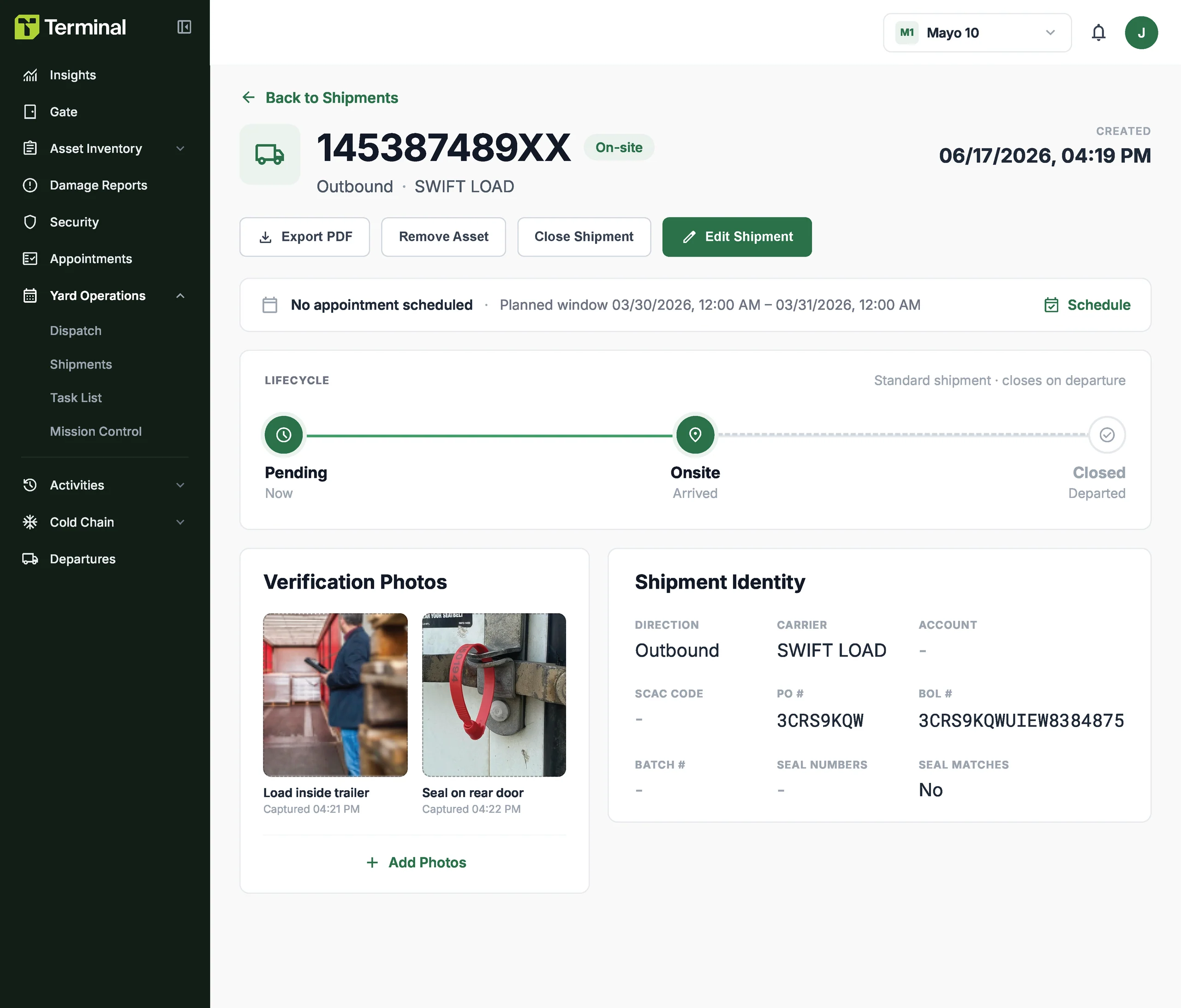
Terminal captures and verifies what's on every trailer against the manifest, with timestamped visual evidence from dock to gate, so you can win chargeback disputes instead of conceding them.
The Problem
When a customer files a chargeback most yards have no proof
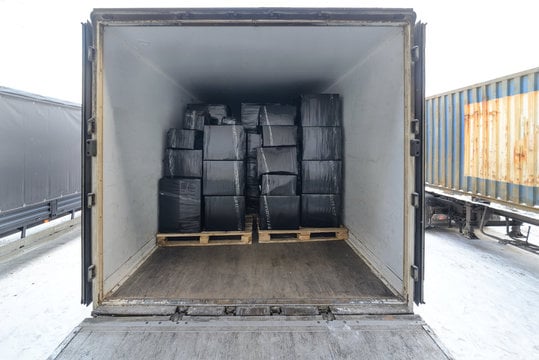
When a customer files a chargeback or an OS&D claim, the burden of proof is on you, and most yards can't meet it. There's no record of what was actually loaded, no chain of custody from the dock to the exit, and no evidence to contest a short-shipment or damage claim. So you pay. These disputes are a quiet, constant tax on margin, and they persist because the moment that matters, the load leaving, was never documented.
The Solution
Seamless load verification with Terminal
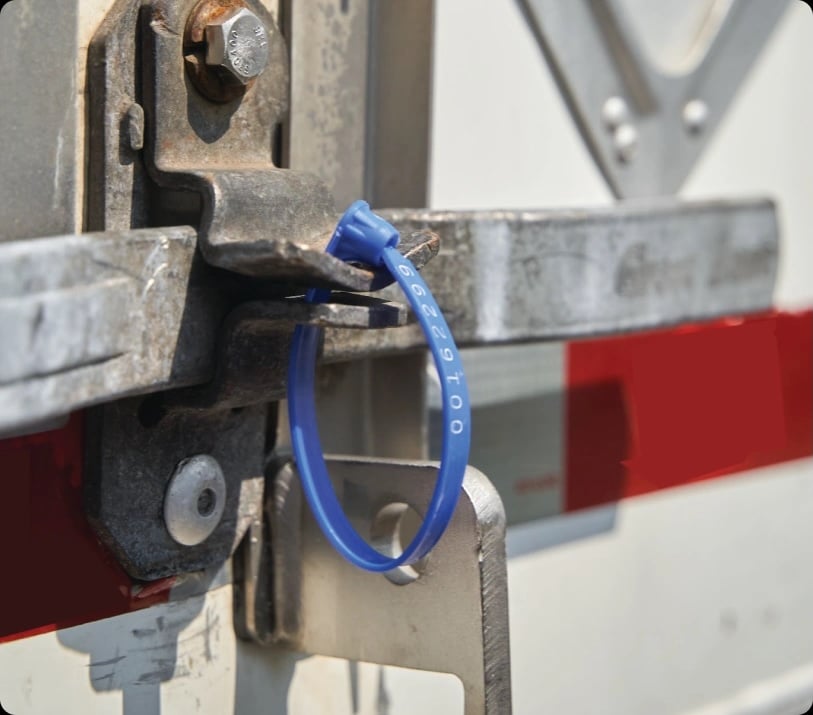
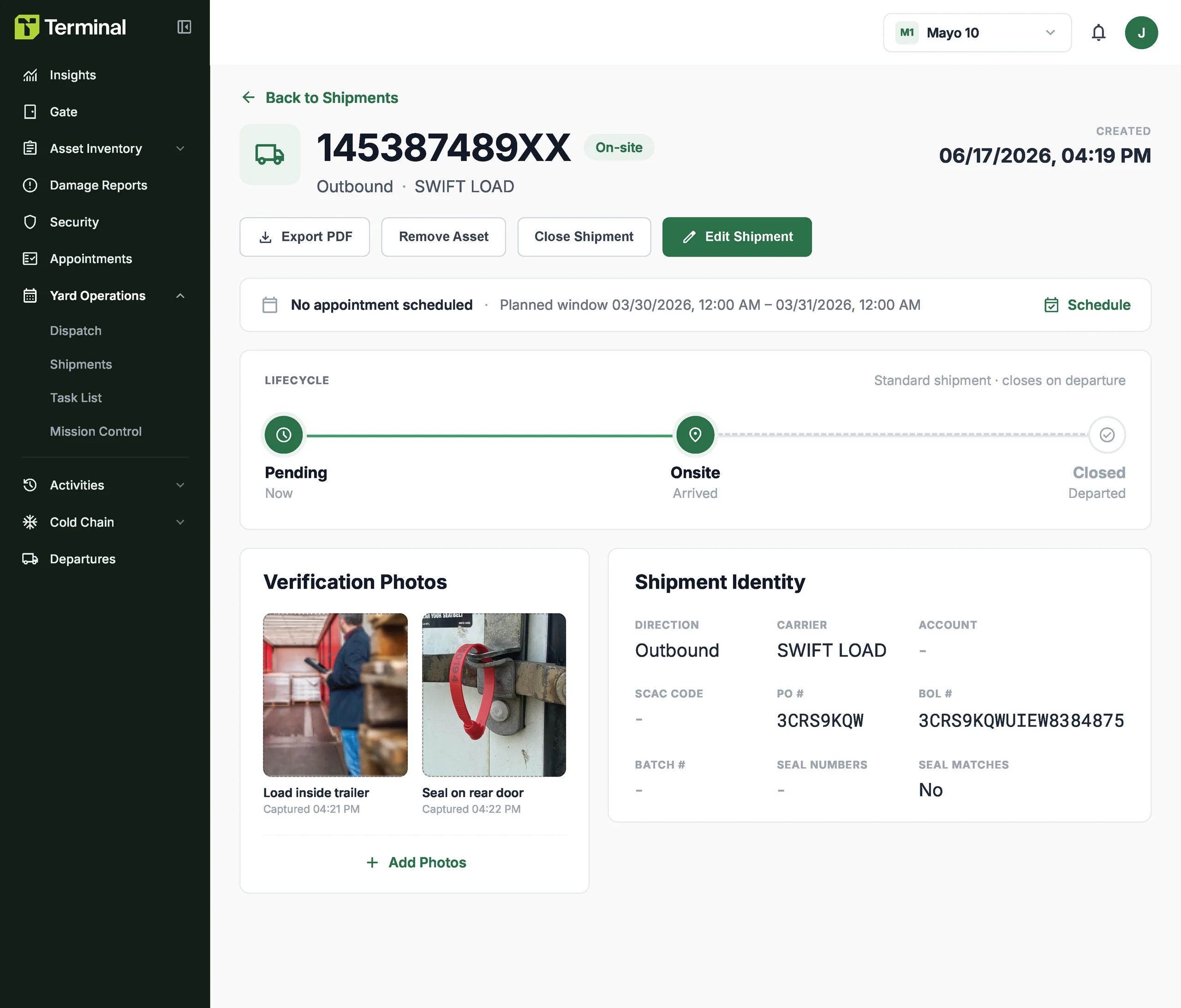
Terminal enables seamless load verification by capturing dock-door data and verifying seals at the point of action, defending against chargebacks and damage claims, and providing federated customer reconciliation with a clear audit trail that produces the ISO 17712 seal and chain-of-custody record expected by insurers and CTPAT.
FIELD GUIDE
A practical playbook for proving what left your yard.
How Terminal Load Verification Works
02It builds an unbroken record
03It catches the discrepancy now, not in a dispute
04So when the claim comes, you have proof
05And it ties back to the whole visit
FAQs
Here are the most common questions teams have before getting started with Terminal Load Verification.
What does load verification actually capture?
The load state at the dock and at gate-out, verified against the manifest, with timestamped visual evidence.
How does this help with chargebacks?
You get a dated, image-backed record of what left, the proof you need to contest a claim instead of paying it.
What is chain of custody here?
An unbroken, timestamped record of the load from dock to exit.
Is the evidence usable in a dispute?
Yes. It's timestamped, attributed, and stored as a defensible record.
How does Terminal help you comply with ISO 17712 and CTPAT?
Terminal provides a federated customer reconciliation with clear audit trail producing the ISO 17712 seal and chain-of-custody record insurers and CTPAT expect.
Other Terminal solutions that pair well with Load Verification
I can't see what's in my yard.
YARD VISIBILITY - Know where every trailer is, in real time without tagging a single one. Terminal's Yard Visibility and Asset Inventory keeps track of where all of your material is in your yard and gives you single pane of glass reporting of all tasks from gate to dock.
Learn More0Manual Yard ChecksMy gate is a bottleneck.
GATE MANAGEMENT - Digitize gate check-in and check-out. With Terminal Gate Management, our computer vision system captures key data on trucks, chassis, trailers, and containers and uploads them before the truck stops at the gate. Check-in/out in under two minutes, no clipboard required.
Read More85%↓in Gate Processing TimeStop dispatching spotters by radio and guesswork.
DISPATCH AND SPOTTER ORCHESTRATION - Terminal assigns the next best move automatically, by priority and proximity, so your spotters stop deadheading and your supervisors stop guessing what's urgent.
Perimeter security and cargo fraud keep me up at night.
YARD SECURITY - Verify every driver and load before it moves. Terminal Yard Security checks the driver's identity and the carrier's legitimacy against the appointment automatically, so a fraudulent pickup is stopped before it leaves.
Read MoreMaxAsset ProtectionMy dock is constantly backed-up.
CARRIER APPOINTMENT SCHEDULING - Carriers self-schedule and cut dwell. With Terminal Carrier Appointments, carriers self-book, slot appointments dynamically against real arrival times, and tie every appointment to the gate and the dock, so your doors stop sitting idle and then getting slammed.
Read More50%+↑In Yard Throughput

Your yard automation journey
starts your way
Let's discuss how Terminal can help you with your yard of the future. Start with one application and only pay for what you need. Contact us today to schedule one of the following:
30-minute demo
Needs discovery call
Yard ROI assessment
Anything else...
Powering the yards for brands large and small.
Resources
Learn more about Terminal Load Verification
blog
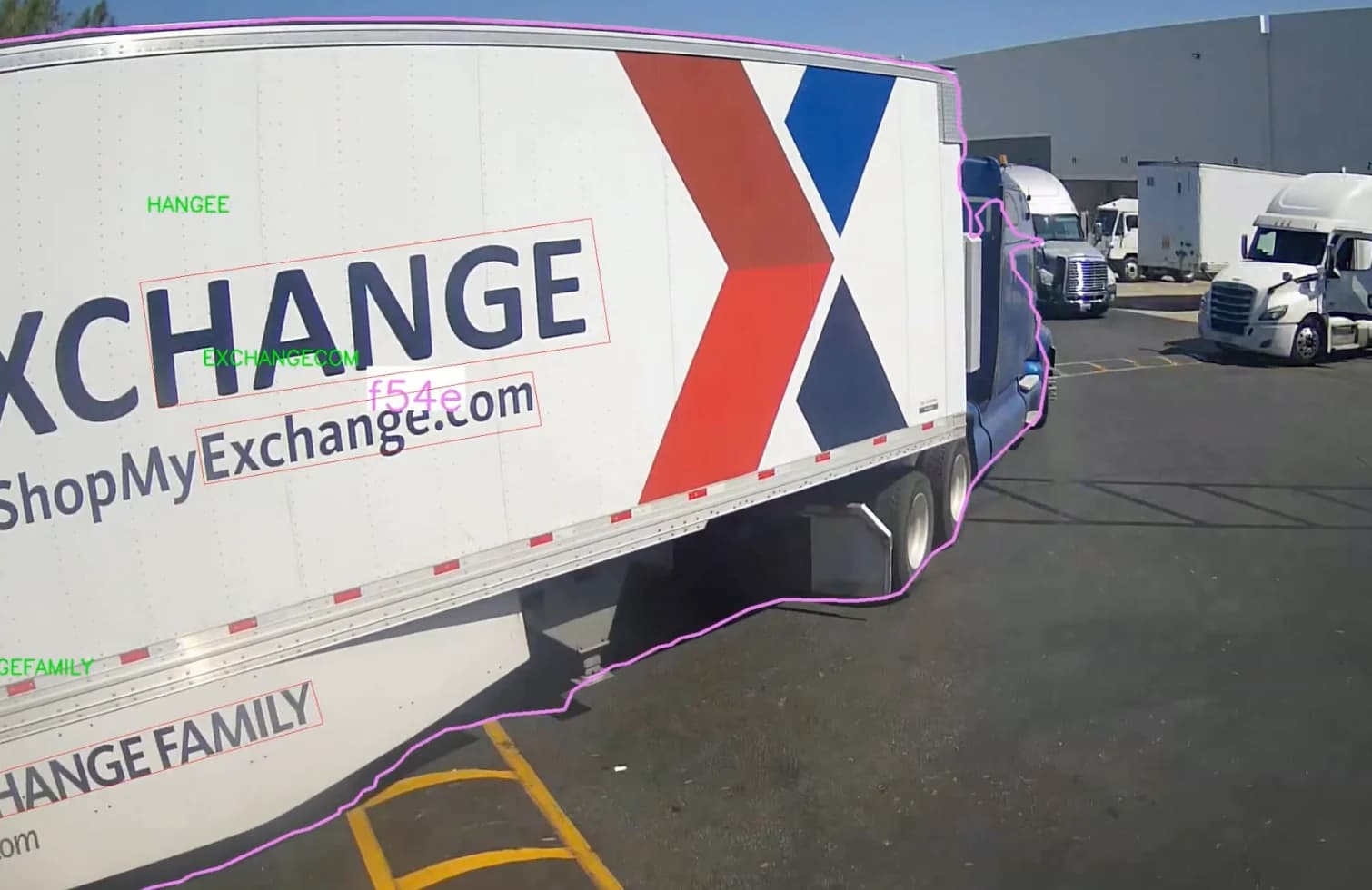
OCR Reads the Plate, Computer Vision Runs the Yard.
OCR (the "AI camera" most gate vendors actually sell) just reads characters into a string and hands the work back to your guard, dispatcher, and clerk, which is why a faster clipboard never transforms a yard. Terminal's computer vision reads, then classifies and understands the whole scene, then acts on it (open the gate, hold the fraudulent carrier, route the reefer), turning recorded data into orchestrated decisions worth 4x ROI in year one.
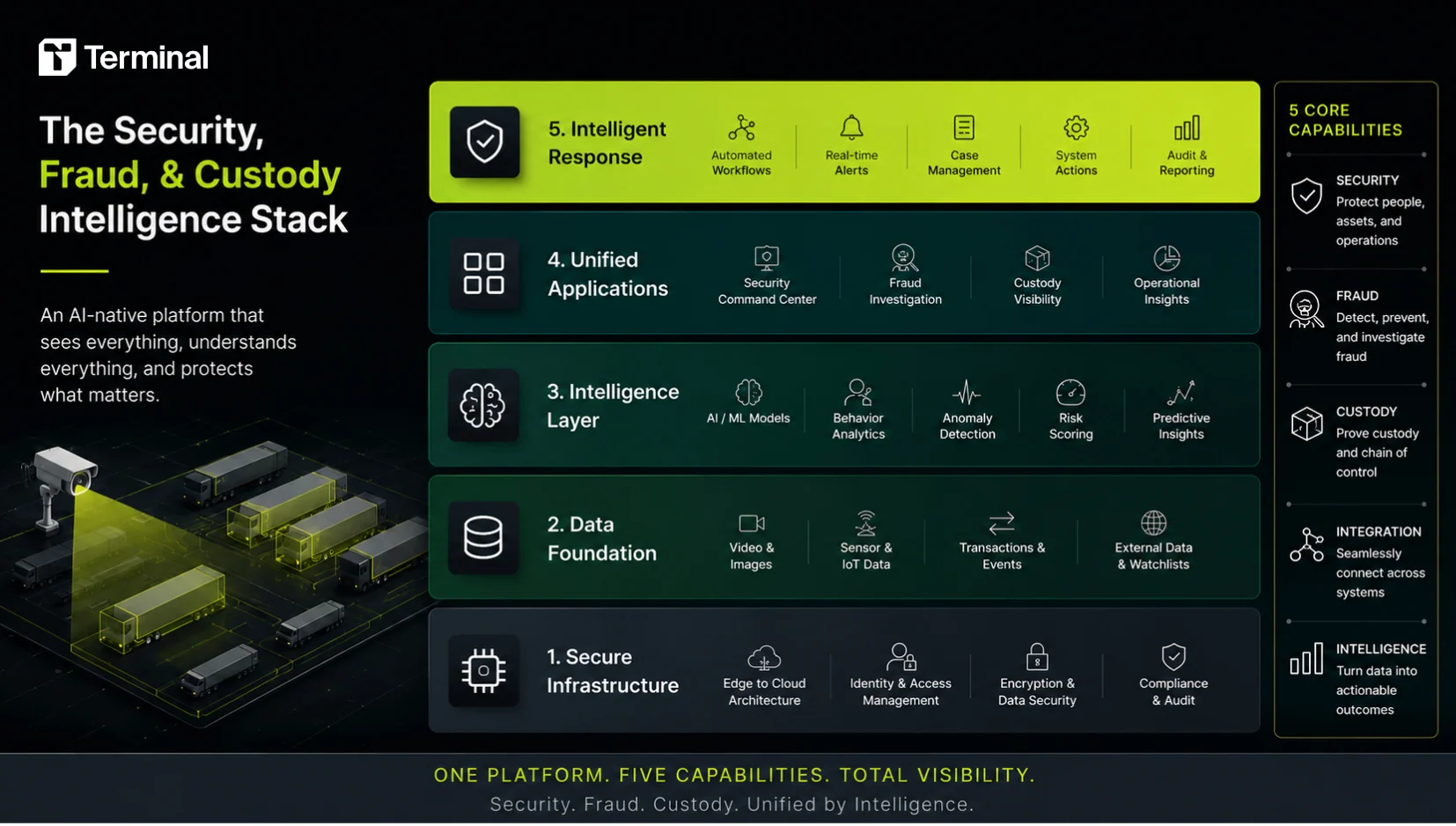
announcement
Terminal Announces Yard Security
Yard Security, Cargo Fraud Prevention, and Chain-of-Custody Have Been a Patchwork; Terminal Industries Just Made Them Native to their Yard Operating System
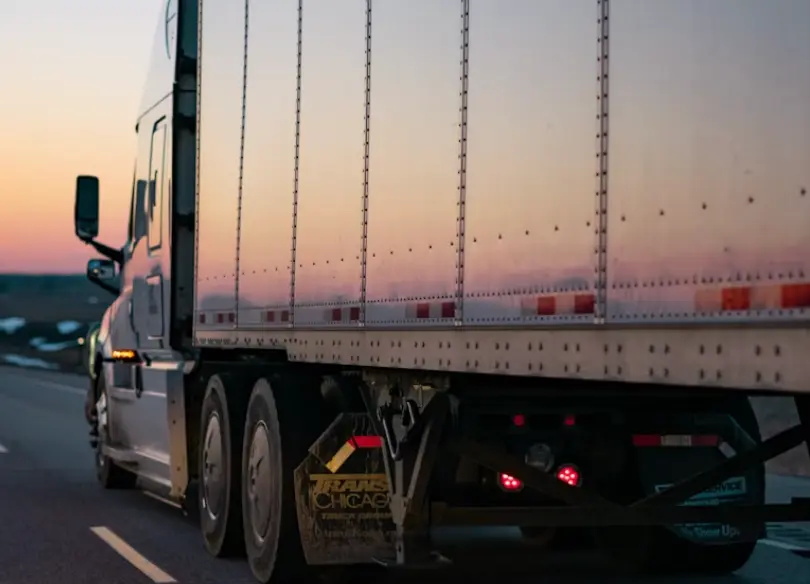
article
Freight Validation: The Critical Foundation of Modern Transportation Logistics
Freight validation is crucial for ensuring reliable transportation logistics. It guarantees that every shipment meets accuracy, legal, and regulatory standards before becoming part of the supply chain. This process involves multiple checks to verify carrier credentials, shipment documentation, load specifications, and compliance requirements.